Pages

Showing posts with label deer. Show all posts

Friday, August 5, 2016

Opening Day

Photo: Chris Carson
I see it already at Twisted Oak.  The deer hunters have woken out of their sleepy, air conditioned, Summer hibernation (and honestly, I can't blame them).  Some are coming from fishing the lakes and bays, and some have been on vacations. Usually around August, we realize that there is work to be done on the lease and feeders need to be fed.  With that usually comes a little hog and varmint hunting, because you can't go to the lease or ranch without doing some hunting. It is with bated breath that we wait... and wait.... for that most sacred day to a deer hunter... OPENING DAY! 

September will bring Dove Season.  This year, it will be the longest in 80 years for the State of Texas. An extra 20 days will have hunters scouring the skies in search of that tell tale silhouette of a dove. The bruised shoulders will come and go, millions of shotgun shells will be spent, dove bags will grow full with birds and shells, and the weather will begin to turn cooler.


Photo: James Plant
With the smell of gun powder still lingering and feathers sill dancing on the wind, October will bring Open Day of Bow Season.  Bowhunters will camo up, spray themselves down, and head out to climb into their stands. These thrill seeking deerstalkers live for the opportunity to match wits and
senses with the wariest of prey in order to feed the family.  For most, the thrill of getting into the habitat, where the animal eats, sleeps and/or travels to conceal themselves and release and make a clean ethical kill shot at incredibly close distances is exhilarating to say the least.  


Photo: Chris Carson

November brings Opening Day of Gun Season.  With the pursuit of wild game on their minds, a yearning for cold weather and bags of gear for all occasions, these predators will rise early and head quietly into the woods with the goal of putting dinner on the table with the same clean ethical kill shot at great distances.


Photo: Chris Carson

Whether you hunt with a bow or a gun or both, Opening Day is usually circled on your calendar.  A sacred day that one waits for, dreams about, plans for... Lives for.  For many hunters, luck and superstitions that carry on all season are born on Opening Day.  
Routines are set, deer are killed, tags are filled, deer are skinned and cleaned, and stories are shared around the campfire.  It's a fellowship among hunters, a bond that is created, a brotherhood... for some, a calling.  Life is good!

What does Opening Day mean to you? Which one do you celebrate? Do you celebrate both? Do you celebrate at all?  Let us know in the comments or on Facebook.


Thursday, April 28, 2016

46 Outdoors Adventure Files: Whitetail FAIL and What I Learned

Take a kid HUNTING!
Photo: Chris Carson
Usually, my final hunt of deer season is an annual hunt with my brother, his in-laws, and a few of his friends.  We share stories and pictures, eat some incredible meals, catch up with each other, and enjoy fellowship with family and friends.  Almost secondarily, we hunt, we kill, and we process much of the meat that will become meals for our families and friends.

I say secondarily, but in reality, this is a high fenced ranch under MLD permits, and we are there to do a job.  We are usually tasked with shooting does to keep the herd in balance and occasionally, we get a "hit list" of certain deer that need to be removed because of poor genetics or some other reason. Aside from the food, friends, family, and fellowship, we get to see some magnificent deer.

The last few years, for differing reasons, I have only been able to make it down for a day or even just an evening hunt.  This past season was no exception to that as I arrived about 2:30 on Friday afternoon and had to get back for something (probably baseball) on Saturday morning.

I met the guys at the skinning rack where they were finishing boning out a few deer shot the night before.  Once that was done, we headed back to the bunkhouse and began preparing for the evening hunt and getting an idea on where everyone was going to hunt.

My brother had asked his father-in-law (the land owner) about a buck he had seen that morning.  He was an 8 point that had been fighting and had broken off all his points on one side. The decision was made to take this deer out if it was seen.  I was also told to shoot a 6 point that had long hair and it's tongue was hanging out if I had a shot.

I was set up in a blind with an oat patch to the southwest, and a sendero to the northwest.  The wind was blowing from the south east.  It was early to mid January in South Texas a couple weeks or so post-rut.  A young buck came out shortly after I was dropped off to feed on the corn dropped in the road as my ride left to drop someone else.

About an hour later, with the young buck still eating, a few yearlings and young bucks came out down the sendero near the feeder.  I watched them for a good 20 minutes or so when a few more bucks started showing up, one of which was a buck that had a main beam with all three broken tines on the right and 4 points on the left.  I texted my brother to let him know what I was seeing and whether this was the deer he was talking about.  We decided that this deer was much younger than the one he had seen and passed.

I settled into watching the deer I couldn't shoot, when a big deer came to the feeder.  This was one of the group of deer known as "The Bubbas".  I had a great view of this deer through my binoculars.  I wanted to get a good picture of it, but all I had was my iPhone.  At 100 yards, a zoomed in photo was grainy and the deer looked small.  Without the zoom, this big bruiser looked like an ant with a bush on it's head.  I really do need to invest in a good camera!

As the evening wore on, the bucks all slowly left the sendero and a whole herd of does and yearlings
started showing up in the oats.  I quickly began to try to track which ones had fawns and which ones didn't.  As more and more deer showed up, it became increasingly more difficult to tell does from button bucks.  I noticed a deer on it's own on the south side of the pasture.  I looked her over and decided this was an old doe with no fawns making her a great candidate.  The way the blind was oriented, I put my rifle through the window on my left and set up for that shot.  I put the cross hairs on the old doe and waited for her to turn broadside.  As I was waiting, I was continually looking out the window that was in front of me to check on the rest of the herd to make sure I wasn't getting busted by them.

What seemed like an eternity later, I glanced out that window and saw something weird.  I did a double take.  My rifle still hanging out the window to my left, I brought my binoculars up and looked over the stock to see if I could identify this deer.  The best way I can describe it is that it looked like a miniature elk.  It was the strangest thing.  It had long hair on it's neck and shoulders; maybe a little reddish or brindle in color.

I moved my rifle from one window to the other.  Immediately, I began looking for a tongue that was hanging out.  The sun was beginning to set behind an overcast sky and while it looked up, I saw something dangling from it's mouth.  I couldn't be sure it was his tongue though and it gave me pause.  I kept looking.

I confirmed 6 points and was thinking this had to be the freak of nature they were describing.  I kept looking for the tongue to confirm the three characteristics I was given.  As my scope actually gathers more light than my bino's do, I was looking through the scope to confirm this deer's identity.  This deer must have had it's head down between rows for a good 5 minutes at a time.  Finally, he looked up and I saw that tongue just dangling out of the side of it's mouth.  This was a "hit list buck".  I was ready.  I settled into a comfortable position and waited for this deer to give me a good shot. When it did, I squeezed the trigger.

Take another kid HUNTING!
Photo: Chris Carson
The deer jumped forward, turned around and began running across the field.  I knew something didn't seem right.  I watched as this deer high tailed it across the pasture expecting it to crash or stop and keel over.  About 1/2 way across the field, I realized that wasn't going to happen.  I had already racked another shell, because I make it a habit to do so for just this situation, but I lost the angle on him and had to pull the rifle out of one window and put it back in the other.  I got back on him just in time to see him jump the fence and disappear into the brush.

I got down and went looking for blood or hair or any sign that my bullet made contact with the freak of nature, but sadly... I MISSED!

I couldn't believe it.  I don't miss very often.  In fact, I can't remember the last time I flat out missed an animal altogether.  I've mad some bad shots before and had to track them a ways, but I don't think I ever remember a flat out miss since I was a kid trying to shoot my first deer.

I have waited several months to write this, because I wanted to confirm my suspicions.  I recently took a trip to the range and confirmed my theorey.

That day, when I was getting ready, I realized as I was loading my rifle that I had two different rounds for that caliber.  I knew I had only bought one box of ammo.  It took me about a week or so to remember that a friend had found a box of Nossler bullets he knew I liked and bought them for me.  They were a different grain than what I had sighted in with and as such I put the box away in my gun case.  I guess I must have left a few in my backpack though and they mad their way into the pocket I keep where I keep my ammo.  One was longer and one was shorter.  I guess I picked the wrong one, Because the other shell I had in my hand that day hit the bullseye at 100 yards.

I was disappointed that I missed, but I always try to learn something from my mistakes.  My lesson here is to always check your packs, keep them organized and store your equipment properly.  It's a pain to pack and unpack every time you go, but a little extra time spent packing and unpacking won't be too painful.  I for one, assume that I have what I need in my backpack, because I never unpack it. Several years ago, I scouted the morning of opening day of rifle season because I went to the blind a left my magazine and shells at camp.  The fact of the matter is you don't know if it's there unless you pack it yourself... and even then it's sketchy at best (at least for me anyway)!  


Monday, April 11, 2016

46 Outdoors Prepare and Pursue Hunting Checklist for April

April is a beautiful month in Texas!  Temperatures are still relatively cool.  The wildflowers are in bloom and nature is alive.  Abundant wildlife roam the mountains, hills, plains, canyons, plateaus, and coastal regions of our great state. There are many things for the sportsman to do this month.

Here is your April edition of the Prepare & Pursue Hunting Checklist...

Clean that shotgun. There is one sound in the woods this time of year that a hunter desperately wants to hear; and that is the gobble of old Mr. Longbeard.  Turkey season is upon us, and all we can think about is calling in a big ol' Tom.  Clean that shotgun and go huntin'!

Photo: Chris Carson
Feeders.  Keep those feeders filled. Does are pregnant and will be dropping fawns soon.  Ample food supply is key to their survival.  Don't for get that big buck either.  I once heard that deer antlers are the fastest growing tissue on the planet.  Pack some veins on that velvet popping out with a protein supplement.  Come December, you'll be glad you did!  Check the batteries an solar panels in motorized feeders and finish any unfinished maintenance issues you need to from March.

Blinds.  Finish up those lingering blind improvements.  You don't want to get caught up dealing with those last minute issues in early Fall because you procrastinated now.  If you are switching stands or scouting new areas, finalize those decisions soon.

Food Plots.  Plant those food plots if you didn't get them in last month.  Those pregnant and soon to be nursing does and their fawns will be grateful.  So will you when you shoot a healthy, mature deer.

Practice.  Never stop practicing.  Mix it up.  Shoot some long distances for fun.  Going above and beyond the shot you will make in the field will keep you sharp for the hunt.  Practice, practice, practice!

Photo: TPWD
Hunt turkeys.  Look for those turkeys roosting in the evening and set up on them before first light. Don't go back to the cabin too early, look and listen for those gobblers in the late morning hours when the hens go off to lay eggs and tend to their nest.  Gobblers will be looking for other hens at this time... Wait them out!

Hunt hogs.  Your local farmers and ranchers will thank you for depredation hunting these pesky, ever-reproducing, menacing swine.  Hogs are a damaging to crops, kill small livestock and fawns, and tear up the land, fences, and more.

Hunt more turkeys.  This is the fun stuff we like to do as hunters.  Don't make it all work! spend some time enjoying what we do in the outdoors!

Hunt predators and varmints.  Pregnant does need your help! Keep those predators under control.  It is a great idea to do this before the fawns hit the ground.  Fawns are an easy meal for a coyote or a bobcat.

Hunt more turkeys... You get the idea!

We all have our favorite animals to hunt.  If you can't tell, I'm a big fan of turkey hunting.  The interactive process of the hunt and knowing I called a gobbler in to dance with the decoy is one of the most exciting things I can think of doing.  There are plenty of things to hunt this month, so get busy!  But, don't forget the chores too.

One last thing to add to the list... Go FISHING!


Wednesday, March 23, 2016

Why do I hunt and Fish? It's A Way of Life

A day's work in the Lower Laguna Madre
Photo: Cole Carson
The other day, I had someone ask me why I hunt.  It kind of took me by surprise.  This person is more of an acquaintance than anything.  Just someone I see picking up the kids at school or at the park.  I guess living in Texas with very little resistance to my lifestyle, I have become complaisant in not having to defend my choices when it comes to hunting and fishing the way many people do in other states.

My answer was basically "because I want to" with a dose "how dare you question my way of life" attitude.  Then, it dawned on me that this person was trying to have an intelligent conversation as to why I like to hunt.  I could tell by this time that this person felt like she crossed a line by asking the question.  I tried to circle back to the conversation, but she didn't want to talk about it.  By the time that awkward conversation or lack thereof was over, I was disappointed in myself for not articulating myself in an intelligent manner.  In retrospect, I was truly surprised by the question, but my inability to give a thoughtful, accurate, and detailed response probably served to strengthen even the tiniest amount of contempt for my way of life.

My way of life... Let's think about that for a minute.  I live in the city, there is a grocery store 5 minutes from my house.  My daily routine involves shuttling kids around, baseball practices, games, tournaments, grocery shopping, work, etc., all the usual stuff most of us do.  As I write this, I can hear the traffic on a major highway.  So, how can hunting and fishing be a way of life?  Well, I guess when you compare that to life in rural Alaska or living off the land where your survival is at stake, it can be a tough case to make.

A rare moment of peace between brother and
sister brought to you by a peaceful setting
Photo: Chris Carson
Consider for a moment though, the things you find in your food.  If you eat meat from a grocery
store, the growth hormones and other toxic trash you are putting in your body is mind blowing.  The apple you had for a snack was likely sprayed with pesticide, and genetically engineered to taste a certain way or have a certain color or be a certain size, or more accurately produce a certain amount of money. I seriously doubt that the health benefits are anywhere near what they once were.  But to me this begs the question... If we can genetically engineer these things, why can't we engineer healthier, better tasting foods?

The answer I came up with is this: We can't beat nature. Nature produces the things we need to fuel our bodies.

There is also something uniquely satisfying about bringing home dinner.  I have always been a meat and potatoes kind of guy, but when you harvest your meat, gut and skin the animal yourself, cut your dinner off the bone, grind it or tenderize it, season it and cook it yourself... To quote Kenyon Bankston of Southern Boyz Outdoors; "It just don't get no better than this!"

In Genesis 1:26 God gave man dominion. He intended for us to live and thrive upon what He created. Some will bring up Matthew 5:5 in response to this and say "The meek shall inherit the earth". Let's take a look at that word "meek".  Notice it does not say "weak".  Some synonyms for the word "meek" are: mild, humble, and modest. I call this "quiet confidence" with my baseball players.  With confidence comes strength and tenacity. An antonym is pride.

A nice typical 8pt. buck near Hondo, TX
Photo: James Plant
Then there is the argument for conservation.  Without hunters hunting these animals, overpopulation would be detrimental; not only to the animal, but it's food and water sources as well.  The natural ecology would be thrown out balance.  Disease and hardship for these animals, especially in years of drought, would be devastating to their numbers and the plants, insects, and other food sources along with other animals that use the same food and water sources.  The damage to the eco-system would be exponential.  One of their natural predators is humans. Take hunters out of the mix and you will have a problem of gigantic proportions.

To those that would argue that "Shooting a deer at 100 yards is too easy." I would say this: one of the greatest advantages we were born with is the ability for critical thinking, problem solving, and an opposable thumb. Many animals are blessed with speed or strength and carry their own weapons as body parts.  Hunters were blessed with the ability to outwit their prey as well as design and build their weapons.

Sunset from a ground blind near Hondo, TX
Photo: Chris Carson
Then there are the things I get to see that most people either don't have the opportunity to see or don't appreciate.  Last August during my fishing trip to Port Mansfield, we saw a sea turtle that was about as big as the hood of my truck!  I have also seen an otter in Rebecca Creek.  I thought it was an otter, but had to look it up online.  I had no idea that there were otters in Texas.  I have also seen strutting turkeys, bobcats, foxes, a mountain lion, and a badger.  All of them just doing what they do in their natural habitat.  Then there are always the fiery sunsets, sunrises, the sounds or even the quiet time nature provides.  I feel blessed to be able to experience all these things.  Of course it is not required to have a weapon in my hands when I see these things, but hunting and fishing trips provide the convenient opportunity to appreciate these things.

In short, I am an apex predator.  I take my place on top of the food chain as it should be; as it were meant to be.  Weather it's by rod and reel, bow, rifle, or any other (legal) means, I will do what I was designed to do by my Creator: hunt, fish, and provide for my family by outwitting my prey. To me, that is my way of life!

Tuesday, March 15, 2016

46 Outdoors Prepare and Pursue Hunting Checklist for March

Photo: Chris Carson
March in Texas and many southern states, where weather patterns can be unpredictable and ever changing; this can provide ample opportunity for hunting and fishing.  While we begin to enjoy longer days and some warmer weather, we can get our outdoors chore list done too.

Here is the 46 Outdoors Prepare and Pursue Hunting Checklist for March:

Shed Hunting.  A popular activity for the kids as well as the adults.  Get into the woods and start looking for antler sheds.  Most bucks will have shed their antlers by now. This is also a great way to begin scouting for next season.  Look for rub lines and scrapes that you may not have seen last year. These sheds are also a good way to find out which bucks made it through the season.  Look for identifiers such as point totals, and characteristics like sharp angles. Friendly wagers like total score on all sheds keeps it interesting. 

Look for roosting turkeys.  Turkey season begins in March. Start looking for those roosting birds. Look for places to set up on them.  Look for secondary areas and access routes in case you get busted.

Photo: Chris Carson
Practice your shooting. Weather you rifle hunt or bowhunt, it’s always a good idea to practice your shooting.  A little realistic practice may be in order too. Sometimes I use this time to varmint and predator hunt from my stand.  Small targets at long distances for rifle shooting is a great way to sharpen those skills.  From the bow stand, bring those critters in close and learn your distances, arc angles and other variables that will make you a better shooter. This also helps keep those predator populations in check.

Feeder Maintenance. If you are anything like me, by now your feeders are completely empty.  Use this time to perform some annual maintenance to your feeders.  Clean them out, tighten any bolts, screws, nuts that are loose. Seal holes in the drums. Look for worn out parts and replace them. Oil moving parts with some 3 in 1 oil. Touch up or repaint. Check the legs and make sure everything is anchored well. If your feeders are penned up to keep livestock out, check your fences and gates.

Photo: Chris Carson
Stand/Blind Maintenance.  Fix stand problems.  Check your ladders or stairs for unsafe conditions.  Seal up cracks to keep wasps and other critters out. Touch up or repaint.  Start your remodeling projects. How many times during deer season did you think about adding a shelf over there or a gun rack over here? Too noisy? Add carpet. Rework your windows and doors. I can’t begin to tell you how many projects I thought up while sitting in the stand.  Now is a great time to start those projects.

Plant Food Plots.  Bucks, does and fawns will all appreciate your effort in providing a spring and summer food source.  Deer get a significant amount of water from the water in the plants they eat. This will help your does that are carrying fawns and lactating throughout the summer along with those big bucks in bachelor groups. If you are thinking about planting a food plot, now is the time.

Clear and tweak your shooting lanes.  If you need to clear your shooting lanes, now is a good time to do so.  The issues you may have had during deer season are fresh in your mind.  Also, it will leave much less work to do in the heat of August if you do it before all the spring growth.

Photo: Texas Parks & Wildlife
Turkey Season.  Turkey season begins in March. Get out there and use that MRI (Most Recent
Intelligence) you gathered from the beginning of this article to start calling in those gobblers!

Hog Hunting.  If you are in Texas, these pesky critters are open season and sausage, ribs and ham are good any time of year.


Enjoy your time in the woods. Take a kid hunting.  Spring is the best time of year to introduce kids to the outdoors.  Take them for a walk in the woods or a wildlife drive at dusk.  Let them drive on the dirt roads on private property and teach them about nature. Even the most girly, girl or screen addicted child who does not want anything to do with hunting or fishing will enjoy the sight of the wildflowers, seeing a deer, or just about anything unusual we come across in nature. Be prepared for questions. Who knows, it might just open the door for another outdoors enthusiast.


Friday, February 26, 2016

Deer Season Recap & A Plan For 2016/2017

A nice 8 point Jan. 2009
Several years ago, when my youngest son was born, I came to the conclusion that it was time to get off my deer lease.  After several successful seasons of management and letting deer walk in hopes of shooting a mature buck one day, I was now going to let someone else shoot those deer.  However, I knew that with a baby on the way, mounting bills, and the lack of time I would have to hunt, it was the best thing I could do for my family. Over the course of the next several years, I saw my friends taking bigger more mature deer than I ever have. Nothing like pouring salt in the wound!Fast forward a couple more years and now I am back on the lease.

Back in September, just before bow season opened, we invited Don Bell, creator of Top Secret Deer Scents to Twisted Oak to give a seminar on hunting the rut.  It was a very interesting, and very entertaining seminar that covered the pre, peak, and post-rut activities of the Whitetail Deer, and the use of scents and calls.  The information shared, made me think about the way we hunt in Texas (over baited areas) versus the way many other states hunt (where it is against the law to bait).  

The difference in my mind being that basically, here in Texas, we alter the deer's natural travel corridors by placing feeders to draw them to a specific spot.  We also open up wide shooting lanes along their trail which also has to have an effect on their travels.  Now, don't get me wrong, most hunters are smart enough to place their feeder and stand locations along travel routes to begin with, but not necessarily in areas where a deer would normally stop to browse.  Other times, these feeders placed in oat fields, where deer come to graze.

The way I understand it, (which is from watching TV, and I could be totally wrong here) in other states where baiting is illegal, stands are placed in locations where deer funnel into pastures to graze and browse.  Some states don't even allow hunting over standing crops, so stand locations are forced further back into wooded areas on natural travel routes; and hunters are left to hunt over scrapes and other areas deer are known to travel.  

So, my question became... Do scents and calls work with the way we hunt in Texas?  I believe it's a topic worth researching.  So, I began looking for rubs and scrapes more actively.  I have seen them before, but never really paid much attention to them.  They merely reinforced in my mind that I had placed my feeder in a location where deer were known to travel. Good info to have, but what do you do with that info?  Well, Don answered that question with some great knowledge like when to use which scent, how to apply it, where to apply it and how to change a nockturnal buck's pattern.  I would not do it justice by trying to explain it here, so check out this video.  It's over an hour in length, but as I said, he is pretty entertaining.
Sunset from the bow stand. Near Hondo, TX

The lease I am on, is small and split by a Farm to Market road.  We all have our even smaller areas that we hunt. So, the idea of hunting a specific deer or a scrape/rub line doesn't seem to be very plausable unless it just happens to be in the perfect place. A place where there are no safety concerns with shot direction, I have the right wind direction, can access the spot without spooking everything in the area, and the right buck is traveling that scrape/rub line.  

Since I am now new to the lease again, my area is one that is near the front gate, which has been hunted before, but with marginal results.  I am not sure why things have been so marginal as there is a pond nearby and many, many trails leading out of some of the best cover on the property and our neighbor's property.  This summer, you can bet there will be many scouting trips to figure out the pattern on all this and find the 2x4 walls (as Don likes to put it). 

My season this year was a tough one. Going on what little I knew from my history on the lease 5 years prior, I set things up in a manner similar to the way it had been set up before.  Why would I expect different results?  Storm damage to my blind early in the season and abundant rain keeping things growing and limiting my vision didn't help much either.  

I harvested 2 hogs in my spot on the lease and never saw a deer from my primary blind, except on camera. All of which looked to be pretty young.  I did see what looked like a pretty mature 6 point that made the hit list, but I never saw him in person. It was a pretty poor year.  Toward the end of the year, I set up a secondary bow stand where I began to see what I thought might be a pattern.  If it is then I may have been parking in an area that cut off the deer headed my way. Most of the deer I saw from the bow stand were 150 yds away or more.  I did have some young bucks come into the bow stand on the trail I set with estrus during the peak of the rut.

I was a little disappointed in the way the season turned out, but it was good time spent with my kids. In the next month, I will make a trip or two out to do some shed hunting and begin my scouting for next season.  I like a challenge and look forward to a season full of trials and tribulations next year.  With any luck, I might learn something or even better, harvest the buck of a lifetime!    


Thursday, September 17, 2015

3 Reasons NOT To Walk To Your Stand & How To Pattern That Buck By Driving

In Texas, we have some very large properties to hunt.  To date, I have hunted properties from 200 acres to 12,000 acres.  Some high fenced, most low fenced and I have come to the conclusion, that hunting these properties, of course, requires different strategies,  Strategies change from year to year and from the beginning of the season to the end of the season. But the one thing that stays constant for me is driving to my stand.  Call me lazy or scared of the dark or whatever you want, but a little experience tells me that getting there efficiently without spooking the deer yields better results.

About 10 years ago, I hunted a property that was about 1200 acres.  There were 10 hunters on the lease and it was frowned upon to drive to your stands.  Especially if you had to pass close by another stand to get there.  So, in the interest of going along and not getting booted off the lease, I walked.  Most of the time, I had somebody drop me off at a gate and walked about 1/2 a mile mostly down a sendero to my stand (thanks to Google Earth, I know this is not an exaggeration).

Here are a few reasons Not to walk to your stand.

Noisy... I stumbled over rocks, tripped on stumps, & sweated (BUCKETS... remember we are in TX).   If there was a deer (much less a buck) bedded down within a mile of that sendero, I guarantee you he slipped out and went the opposite direction once I passed.

Safety... Every Saturday morning for 3 weeks, I got in the stand 30 minutes or so before daylight and right at dawn, a coyote would run right down the same path I took to get to the blind. The first week, I fogged up my scope trying to get a bead on him because I was still sweating.  The second week, I couldn't stop him, and the third week he made his last trip down that trail.  I always wondered if he was trailing me or just happened to be on the same trail.  But even if he was just on the same trail, that is a little disconcerting in itself, because my scent had to be fresh.  He knew I was there somewhere, and he chose to follow the same trail... You do the math!

Photo Courtesy Twisted Oak
Scent Control... Back then, the whole scent control craze was in it's early stages with the new products and scent control technology on the market.  It was new to me anyway. My idea of scent control then was more cover scents or lures than elimination. Couple that with hunting the wind and the fact that my blind was 100+ yards away, I was not too concerned.  However, we as hunters and bowhunters have learned a thing or two about scent elimination and how to use these lures and scents more effectively.  If we minimize our footprints, we minimize our scent trail.

Several years later, after many of the original members of the lease left and my friends and I took over, we relaxed those rules and allowed people to drive to their stands.  My buddy Trae had an electric golf cart re-purposed as a hunting vehicle.   He once dropped me off at my blind (a different location), I hopped out and walked about 20-30 yards to my stand.  About two hours later, while I had deer at the feeder, a doe came wandering down that road.  We had corned the road too, so she had her head down sniffing and looking for more corn.  As soon as she got to the spot where I stepped out, she stopped, threw her tail in the air, looked at the blind, and started blowing and stomping.  I was busted.  She didn't see me, she didn't wind me, she winded my trail.  From that point forward I got dropped off at my ladder.

Think about it, even if you are very careful, walking down that sendero and a deer is bedded up just over the ridge (but you don't know that), you are headed into the wind, you are wearing soft pliable soled boots that don't make noise, your backpack is soft and quiet, you are doing everything right. You slip over that ridge and there is your dream buck.  He knows you're there now, but you don't. You walk up within 10 feet of him and he bolts.  He's not stopping until he is 2 counties away from there.

Now, same story, but now you are driving down that sendero.  The buck hears you coming.  His flight response kicks in as you get closer and he runs, but since the rancher drives through there everyday or few days (let's be honest, that IS WHY the road is there), you keep going and he only runs to the other side of the pasture or he jumps the closer fence and heads down into the creek bottom. Now, at least your buck is still in the same county and you might just see him chasing a doe or checking a scrape later in the day.

Also, consider this, you may have just reinforced to this deer that this is a good place to bed.  He heard you coming, his escape route worked, he is still alive, and HIS doe is still back in the area he just bolted from.  Chances are, he's coming back... and now YOU have him patterned.


Tuesday, September 15, 2015

8 Tips For Walking To Your Deer Stand

For quite some time now I have hunted on properties where I could drive (or be driven) to my stand. In fact, my friends and I have spent many a dollar on golf carts, ATVs, UTVs, and compact 4x4s, to get us to our stands. However, this year I find myself in the position of walking into my stand locations and this has had me thinking about preparing for that walk to my stand. How do I get there without spooking that big buck?

Fortunately, I have experience to draw on here as about 10 years or so ago I was on a lease where we walked to our stands. In my opinion, I think walking in is way over rated for a number of reasons, but that is another story (literally) and like it or not, I will be doing my share of it this season.

Control your scent... Go through your normal scent control routine and wear your scent controlled clothing. Use a cover scent if that is what you do.  I have been known to step in cow manure to kill the scent of the road and no telling what other scents are on my boots. (again, this is a another story by itself). Make sure you use a scent control spray AFTER you get out of the truck.

Carry a good flashlight (or headlamp) with a red filter or bulb (and a spare pack of batteries)...  Studies have shown that deer don't see the color red that well, go ahead and turn on that light.  It is much better to shine a red light than to trip over a rock or walk into a thorny situation.

Clear your path... Walk to your stand once or twice before deer season.  Make sure you path is clear of obstacles. Remember that something as simple as brushing up against a limb can leave human odor. When clearing that path, don't be stingy cutting that path back, but don't clear cut the forest either.

Mark your path... some landowners will frown upon the use of flagging tape and for good reason. I wouldn't want orange flags all over my property. If this is an issue, lay some tree branches down along the path at intervals and fashion them into arrows if necessary to point the way. Don't rely on landmarks. Even if you don't want others hunting your stands, you really don't want them wandering all over you area looking for your hidden stand. By the way, I have ended up lost headed to my own stand before, so don't think it won't happen to you.

Keep your backpack organized and quiet... Invest in a good QUIET backpack that will carry what you need to the stand.  When purchasing a backpack, rub it against itself or your clothes and think about what and how you will wear it. How much noise will in make? I once had a backpack that had so many pockets and crevices that I had to wad up a jacket and put it in the main pocket just to have something in there to give it some body.  I was glad I did though, because the jacket came in handy once when a cold front blew in while I was in the stand. Also, you are constantly handling that pack. It probably has snacks in it (or did at some point), or it rode in the truck with you, so don't forget to give it some attention during your scent routine. Stow all your gear and don't let items dangle.

Carry a deer call... If you stumble or crash into a bush, let out a bleat or grunt and pause for a few seconds.  Animals wander around at night too. Make them think you are just passing through.  Remember, you don't know if they are there or not, and they won't want to blow their cover if you aren't right on top of them. If you do stumble upon a deer bedded down, keep moving and don't make eye contact.  If you walk right on by, they might not run so far.

Photo by: Chuck Crowsey
Enter your stand early...  When heading out to your stand, think about getting there early.  Most of the time, a deer won't bolt out of a bedding area unless they are completely spooked. So, if you are detected and you can get there without completely spooking them, you might get a second chance if you can get settled quickly and wait them out.

Treat your daytime walk to the stand like a spot and stalk hunt... Always carry your bow or rifle as you would if you were going to stalk a deer to kill it, because you just might. Of course, gun and bow safety always comes first, but stop and glass every now and then; move slowly and methodically. I once had a hunting buddy tell me a story about jumping a buck on the way to his stand.  He was unprepared for the encounter. While he was in a stare down with this animal he was fumbling around for ammo and this big buck bolted before he could get a round chambered. While it made for a great story back at camp, it would have been better over fresh backstrap!

In general, the same rules apply.  You must fool the eyes, ears and nose to fool the deer.  This is not an easy task and can be tricky, but if you follow the simple guidelines above, you will minimize your chances of spooking that big buck.  It's not just the buck you have to worry about.  While that doe or little spike is blowing and stomping, and you are staring at each other trying not to move, that big buck is slipping off undetected.

So, what about you?  Feel free to comment and let me know... What do you do to slip into your stand undetected?


Wednesday, September 9, 2015

Hunting The Rut


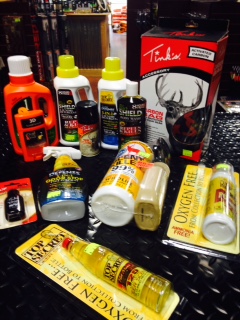
Don Bell, Founder of Code Blue Scents has spent more than 30 years researching deer behavior specifically in regards to scrapes and human scent management. In a FREE SEMINAR this Saturday, September 12, 2015 at 11:00 AM, Don will explain the rut and dispel our misconceptions at Twisted Oak Hunting & Outfitter Supply. If you want to hunt that buck of your dreams this season (not just anything that strolls out in front of your feeder) and feel confident in you strategy, be there on Saturday.  You won’t be disappointed.


When thinking about the rut, I (probably like you) have always had in my mind the images of bucks chasing does until they are both completely exhausted by the chase.  I know that this is part of the process, but I have learned that there is so much more to it.  If you are anything like me, you have had re-occurring dreams of that chase unfolding in front of your stand while you carefully blurted out a “meh” to stop this insanity while you took the shot.


I have since learned bits and pieces of other theories many of which probably hold an ounce of truth or without the correct context mean absolutely nothing.  I can’t tell you how many times I have tried mock scrapes, rubs, etc. How many times have you been winded by that big buck because you didn’t have sufficient scent control or more importantly and more likely you disturbed the habitat entering your stand?  The answer is that you probably don’t even know because you never saw or heard him. 


The truth is, we already have most of the answers, but if we can put the puzzle together in the right order, we will be much more successful hunters.  Don, who is the hunting industry’s foremost scent specialist will walk us through the process step by step in a fun, informative seminar that is sure to enlighten us.  Hope to see you there.  If you have any questions or would like to reserve a seat, comment below or call the store at 830-336-3364.