Pages

Showing posts with label spot and stalk. Show all posts

Monday, March 28, 2016

Hunting or Fishing? Happy I Can't Decide!

Cole's First Fish
Photo: Mike Carden
I don’t remember catching my first fish, but thanks to a photo of the occasion, I can tell you who was there, about how old I was, and what I was wearing.  The species of fish was a little cloudy to me until recently when a friend and I found ourselves bored and the topic was raised. Thank goodness for Google.  I don’t think I have ever caught another fish that looked as ugly as that one! It is safe to say I have been fishing as long as I can remember.  If I am not mistaken, my first real hunting trip took place about age 12.

I owe my love of the outdoors to my older brother, Chuck.  In a recent trip taking my 10 year old son, Cole fishing, Chuck told him “your dad and I just drove around the state of Texas figuring it out”. Chuck was in high school and college and I was in elementary and middle school when that was happening.  I think it was more like he figured it out and showed me how to do it.  However, I did appreciate his including me in the credits there.


When I was a kid, I remember my grandpa referring to fishing as “drowning worms”, yet I'm told that he did enjoy hunting.  Unfortunately I never knew that side of him.  I have also known people who love to fish, but can’t stand to hunt.  I find humor in the fact that they complain about the same thing.  Drowning worms implies that fishing is boring.  People who aren’t excited about hunting are complaining that sitting in a deer blind for hours on end is boring.


Hondo Sunset & Hartcraft Broadheads
Photo: Chris Carson
Aquatic life or land loving mammals... It makes no difference to me.  I will stalk a redfish on the flats or deer in the woods. Also, as I have mentioned plenty of times before, there is something peaceful about sitting in a deer blind with no cell phone ringing or walking down a path with a pail of worms much like Opie on the way to a favorite fishing hole.  These are times to connect with our Maker and appreciate the abundance of beauty there is in this world whether it’s a beautiful green sea with a thin line of blue water on the horizon or a fiery sunset from the blind.  

I really don’t understand why some hunters don’t like to fish and some fishermen don’t like to hunt. Stalking and sight casting to a redfish in skinny water or a bass on the bed is no different than stalking a land animal.  Many hunters enjoy a good spot and stalk, and many fishermen enjoy sitting on a pier for hours on end.

I suppose the difference is that more often than not, when a hunter pulls the trigger or releases an arrow, the projectile finds it’s mark.  Many times a fisherman casts his bait into what seems like nothingness. Sometimes fish are finicky and don’t want the bait, color, or size you are throwing.  Fish can also be difficult to find if you don't have a boat with electronics.  "95% of the fish are in 5% of the water" is how I think the saying goes.  I would say that probably applies to wildlife and land too, but I guess it's easier to see them.  I do appreciate the challenge of "looking" (or HUNTING) for fish when you can't see them, but it can also be frustrating at times.  Sometimes you just have to grind it out.


Chris Castro of Next Level Fishing TV
Photo: Chris Castro
There will always be varying degrees of craziness associated with these endeavors.  Call it extreme if you will, but I must confess being somewhat drawn to them myself.  I have recently made friends with a group of guys, one of which is Chris Castro from Next Level Fishing TV.  Check out their YouTube channel in the link.  These guys go offshore kayak fishing for species one can find in the open waters and depths of the Gulf of Mexico.

Then you have folks like Cameron Hanes who puts it all on the line in the mountains of Alaska and other WILD places.  Check out his video here.  Whether close enough for a bow shot on a bear, or hanging on to a dall sheep that is mortally wounded and about to go over a ledge in the mountains of Alaska, he puts his life at risk in extreme conditions to to get the kill.

I too have dabbled in the extreme side of hunting. I can say that I have been swimming in the Trinity River with a hog while hunting with dogs trained to hunt hogs in some of the thickest briars and brambles East Texas has to offer.  A very strenuous and thrilling endeavor indeed.  I only wish I had a video of that!

Truth be told, I would take it any way it comes, fishing, hunting, or their extreme versions, it’s all the same to me.  I would like to be in much better shape than I currently find myself.  I’m not getting any younger, but then again… That’s a good reason to get myself back in shape.  My bucket list isn’t getting any shorter!

Have you had any extreme hunting or fishing experiences? Do you like one and not the other?  Share you comments with us here or on our facebook page at: https://www.facebook.com/46outdoors/


Thursday, September 17, 2015

3 Reasons NOT To Walk To Your Stand & How To Pattern That Buck By Driving

In Texas, we have some very large properties to hunt.  To date, I have hunted properties from 200 acres to 12,000 acres.  Some high fenced, most low fenced and I have come to the conclusion, that hunting these properties, of course, requires different strategies,  Strategies change from year to year and from the beginning of the season to the end of the season. But the one thing that stays constant for me is driving to my stand.  Call me lazy or scared of the dark or whatever you want, but a little experience tells me that getting there efficiently without spooking the deer yields better results.

About 10 years ago, I hunted a property that was about 1200 acres.  There were 10 hunters on the lease and it was frowned upon to drive to your stands.  Especially if you had to pass close by another stand to get there.  So, in the interest of going along and not getting booted off the lease, I walked.  Most of the time, I had somebody drop me off at a gate and walked about 1/2 a mile mostly down a sendero to my stand (thanks to Google Earth, I know this is not an exaggeration).

Here are a few reasons Not to walk to your stand.

Noisy... I stumbled over rocks, tripped on stumps, & sweated (BUCKETS... remember we are in TX).   If there was a deer (much less a buck) bedded down within a mile of that sendero, I guarantee you he slipped out and went the opposite direction once I passed.

Safety... Every Saturday morning for 3 weeks, I got in the stand 30 minutes or so before daylight and right at dawn, a coyote would run right down the same path I took to get to the blind. The first week, I fogged up my scope trying to get a bead on him because I was still sweating.  The second week, I couldn't stop him, and the third week he made his last trip down that trail.  I always wondered if he was trailing me or just happened to be on the same trail.  But even if he was just on the same trail, that is a little disconcerting in itself, because my scent had to be fresh.  He knew I was there somewhere, and he chose to follow the same trail... You do the math!

Photo Courtesy Twisted Oak
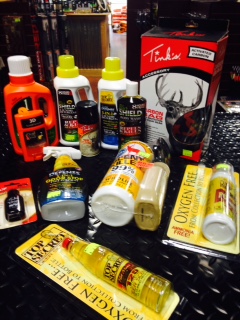
Scent Control... Back then, the whole scent control craze was in it's early stages with the new products and scent control technology on the market.  It was new to me anyway. My idea of scent control then was more cover scents or lures than elimination. Couple that with hunting the wind and the fact that my blind was 100+ yards away, I was not too concerned.  However, we as hunters and bowhunters have learned a thing or two about scent elimination and how to use these lures and scents more effectively.  If we minimize our footprints, we minimize our scent trail.

Several years later, after many of the original members of the lease left and my friends and I took over, we relaxed those rules and allowed people to drive to their stands.  My buddy Trae had an electric golf cart re-purposed as a hunting vehicle.   He once dropped me off at my blind (a different location), I hopped out and walked about 20-30 yards to my stand.  About two hours later, while I had deer at the feeder, a doe came wandering down that road.  We had corned the road too, so she had her head down sniffing and looking for more corn.  As soon as she got to the spot where I stepped out, she stopped, threw her tail in the air, looked at the blind, and started blowing and stomping.  I was busted.  She didn't see me, she didn't wind me, she winded my trail.  From that point forward I got dropped off at my ladder.

Think about it, even if you are very careful, walking down that sendero and a deer is bedded up just over the ridge (but you don't know that), you are headed into the wind, you are wearing soft pliable soled boots that don't make noise, your backpack is soft and quiet, you are doing everything right. You slip over that ridge and there is your dream buck.  He knows you're there now, but you don't. You walk up within 10 feet of him and he bolts.  He's not stopping until he is 2 counties away from there.

Now, same story, but now you are driving down that sendero.  The buck hears you coming.  His flight response kicks in as you get closer and he runs, but since the rancher drives through there everyday or few days (let's be honest, that IS WHY the road is there), you keep going and he only runs to the other side of the pasture or he jumps the closer fence and heads down into the creek bottom. Now, at least your buck is still in the same county and you might just see him chasing a doe or checking a scrape later in the day.

Also, consider this, you may have just reinforced to this deer that this is a good place to bed.  He heard you coming, his escape route worked, he is still alive, and HIS doe is still back in the area he just bolted from.  Chances are, he's coming back... and now YOU have him patterned.


Tuesday, September 15, 2015

8 Tips For Walking To Your Deer Stand

For quite some time now I have hunted on properties where I could drive (or be driven) to my stand. In fact, my friends and I have spent many a dollar on golf carts, ATVs, UTVs, and compact 4x4s, to get us to our stands. However, this year I find myself in the position of walking into my stand locations and this has had me thinking about preparing for that walk to my stand. How do I get there without spooking that big buck?

Fortunately, I have experience to draw on here as about 10 years or so ago I was on a lease where we walked to our stands. In my opinion, I think walking in is way over rated for a number of reasons, but that is another story (literally) and like it or not, I will be doing my share of it this season.

Control your scent... Go through your normal scent control routine and wear your scent controlled clothing. Use a cover scent if that is what you do.  I have been known to step in cow manure to kill the scent of the road and no telling what other scents are on my boots. (again, this is a another story by itself). Make sure you use a scent control spray AFTER you get out of the truck.

Carry a good flashlight (or headlamp) with a red filter or bulb (and a spare pack of batteries)...  Studies have shown that deer don't see the color red that well, go ahead and turn on that light.  It is much better to shine a red light than to trip over a rock or walk into a thorny situation.

Clear your path... Walk to your stand once or twice before deer season.  Make sure you path is clear of obstacles. Remember that something as simple as brushing up against a limb can leave human odor. When clearing that path, don't be stingy cutting that path back, but don't clear cut the forest either.

Mark your path... some landowners will frown upon the use of flagging tape and for good reason. I wouldn't want orange flags all over my property. If this is an issue, lay some tree branches down along the path at intervals and fashion them into arrows if necessary to point the way. Don't rely on landmarks. Even if you don't want others hunting your stands, you really don't want them wandering all over you area looking for your hidden stand. By the way, I have ended up lost headed to my own stand before, so don't think it won't happen to you.

Keep your backpack organized and quiet... Invest in a good QUIET backpack that will carry what you need to the stand.  When purchasing a backpack, rub it against itself or your clothes and think about what and how you will wear it. How much noise will in make? I once had a backpack that had so many pockets and crevices that I had to wad up a jacket and put it in the main pocket just to have something in there to give it some body.  I was glad I did though, because the jacket came in handy once when a cold front blew in while I was in the stand. Also, you are constantly handling that pack. It probably has snacks in it (or did at some point), or it rode in the truck with you, so don't forget to give it some attention during your scent routine. Stow all your gear and don't let items dangle.

Carry a deer call... If you stumble or crash into a bush, let out a bleat or grunt and pause for a few seconds.  Animals wander around at night too. Make them think you are just passing through.  Remember, you don't know if they are there or not, and they won't want to blow their cover if you aren't right on top of them. If you do stumble upon a deer bedded down, keep moving and don't make eye contact.  If you walk right on by, they might not run so far.

Photo by: Chuck Crowsey
Enter your stand early...  When heading out to your stand, think about getting there early.  Most of the time, a deer won't bolt out of a bedding area unless they are completely spooked. So, if you are detected and you can get there without completely spooking them, you might get a second chance if you can get settled quickly and wait them out.

Treat your daytime walk to the stand like a spot and stalk hunt... Always carry your bow or rifle as you would if you were going to stalk a deer to kill it, because you just might. Of course, gun and bow safety always comes first, but stop and glass every now and then; move slowly and methodically. I once had a hunting buddy tell me a story about jumping a buck on the way to his stand.  He was unprepared for the encounter. While he was in a stare down with this animal he was fumbling around for ammo and this big buck bolted before he could get a round chambered. While it made for a great story back at camp, it would have been better over fresh backstrap!

In general, the same rules apply.  You must fool the eyes, ears and nose to fool the deer.  This is not an easy task and can be tricky, but if you follow the simple guidelines above, you will minimize your chances of spooking that big buck.  It's not just the buck you have to worry about.  While that doe or little spike is blowing and stomping, and you are staring at each other trying not to move, that big buck is slipping off undetected.

So, what about you?  Feel free to comment and let me know... What do you do to slip into your stand undetected?